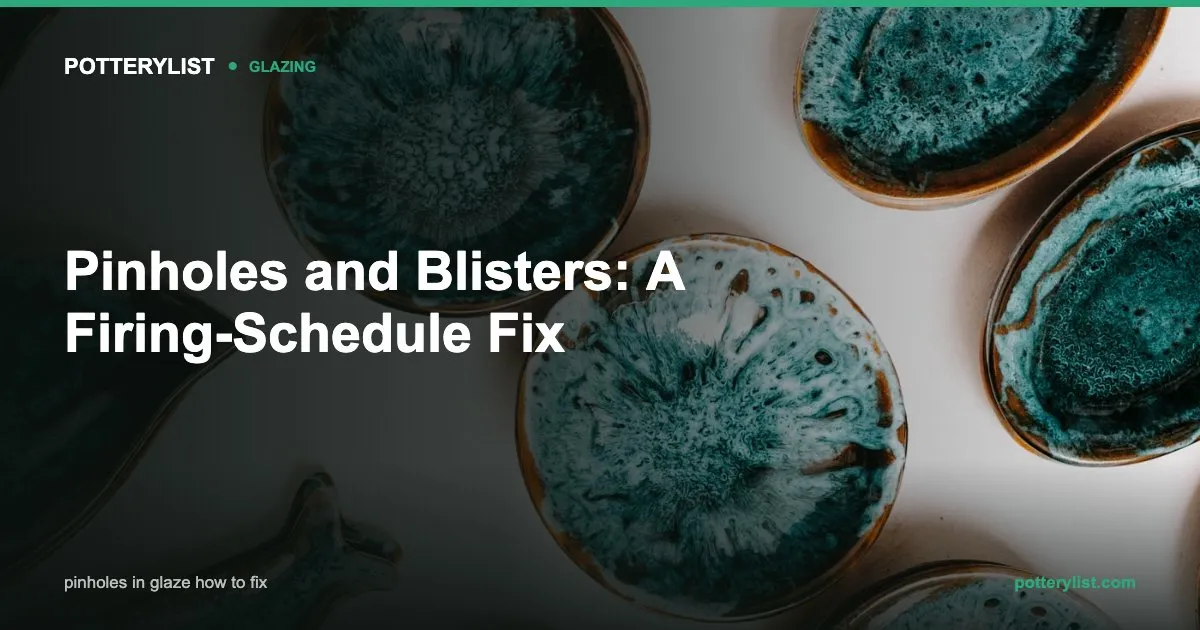
Pinholes and Blisters: A Firing-Schedule Fix
They are not the same defect and they need different fixes. The bisque change, the glaze thickness and the hold-and-slow-cool schedule that solves most cases.

Practical guides for potters and pottery lovers: first classes, clay and glaze, kilns and firing, and selling your work.
They are not the same defect and they need different fixes. The bisque change, the glaze thickness and the hold-and-slow-cool schedule that solves most cases.
Mugs move, sculpture does not. What sells on Etsy, the fee math before you price, how to ship ceramics unbroken, and why Etsy should not be your only channel.
Candling, ramp rates, the quartz inversion and the slow cool that makes matte glazes matte. Worked bisque and cone 6 schedules you can program tonight.
Real numbers, not encouragement: how many hours until your first usable mug, when centering goes automatic, and when your pots stop looking like beginner pots.
Booth fees, 50 percent wholesale margins, commissions that pay worse than they look. Compare the three channels on real dollars per hour before you commit.
Wedging, centering, and no finished pot to take home. Exactly what happens in your first pottery class, what to wear, and when your pieces come back.
Handbuilding is not the fallback for people who cannot throw. Pinch, coil, slab and molds, the tools you need, and why handbuilt work cracks at the joins.
Soft window light and a plain background sell more pots than an expensive camera. Settings, color casts, interior shots and the shot list a listing needs.
Trimming disasters come from timing and base thickness, not tool control. The dryness window, centering on the wheel head, chucks, and when to stop cutting.
Every scrap of unfired clay can come back. The slake, dry and wedge sequence, the plaster mistake that ruins fired pots, and when reclaim is not worth doing.
Elements, thermocouple, relay or controller? Diagnose an electric kiln fault from the symptom, test elements objectively, and know when to stop repairing.
Wash the top only, never the bottom, and use three posts. How to mix and apply kiln wash, grind off glaze drips, fix warping and know when a shelf is done.
Check completed sales, not asking prices. Why inherited china sells for so little, what really drives value, and the pieces genuinely worth an appraisal.
A used name-brand wheel beats a new budget one at the same price, and here is why. Power, drive type, splash pans, and what to check before you pay.
Sealing changes the surface, not the material. Which sealers work, how to apply them properly, and the reason no coating turns air-dry clay into a usable mug.
Air-dry clay is not food safe, not waterproof and sealing does not fix it. Here is what it is genuinely good for, and how to get real work fired instead.
Slake it, screen it, test it. How to find and process clay you dug yourself, why most of it fires low, and the tests to run before it goes near a shared kiln.
Bags, buckets, damp boxes and reclaim, done right. Why mold appears, why moldy clay is usually better to throw, and how to bring rock-hard clay back.
Most people center reliably between their third and sixth session. Struggling in week one is normal. Here are the bracing, speed and sequence that work.
Your studio's cone decides this, not the label. What grog, color and firing range really mean for your first bag, and the mistake that ruins kiln shelves.
Cloudy, yellow, running or dulled color? Here is why clears fail over underglaze, when you need a zinc-free one, and how to test before you ruin good work.
Sgraffito, mishima and image transfer all hinge on one thing: when you apply the underglaze. Here is the timing, the tools and what the clear glaze changes.
Slip casting is mold making, not clay handling. How to mix plaster, build a one-part mold, time a cast, and fix wrinkles, pinholes and slow release.
Shelf hogging, borrowed tools, glaze bucket sins, broken pots: the unwritten rules of a shared pottery studio and how to be the member nobody complains about.
Most potters underprice their work. Here are the formulas that hold up, how to cost a firing properly, and how to raise prices without losing your customers.
Elements and thermocouples are cheap; cracked brick and charred wiring are not. A step-by-step inspection checklist for buying a used electric kiln safely.
A garage is the best room in the house for a kiln, until you check the wiring. Circuits, breaker sizing, clearances, venting, permits and insurance.
Glue can make a broken pot look whole, but nothing makes it food safe again. What to use, why kintsugi kits are not lacquer, and when to call a restorer.
Skip the tool set. Potters already own it. Here is what they actually run out of, why clay is the riskiest gift you can buy, and what to get at every budget.
Firing range, absorption, strength, translucency and how each one throws, side by side. Plus how to tell which clay a finished pot is made from.


Benefit art show and sale
Thursday, December 10, 3:30 to 6:30 pm at Tucker Collective in Memphis. Free admission. Proceeds support West Cancer Foundation.
Event details ›Sponsored by The Potter's Hands Studio
New pottery studios, classes and upcoming pottery events, once a week.